
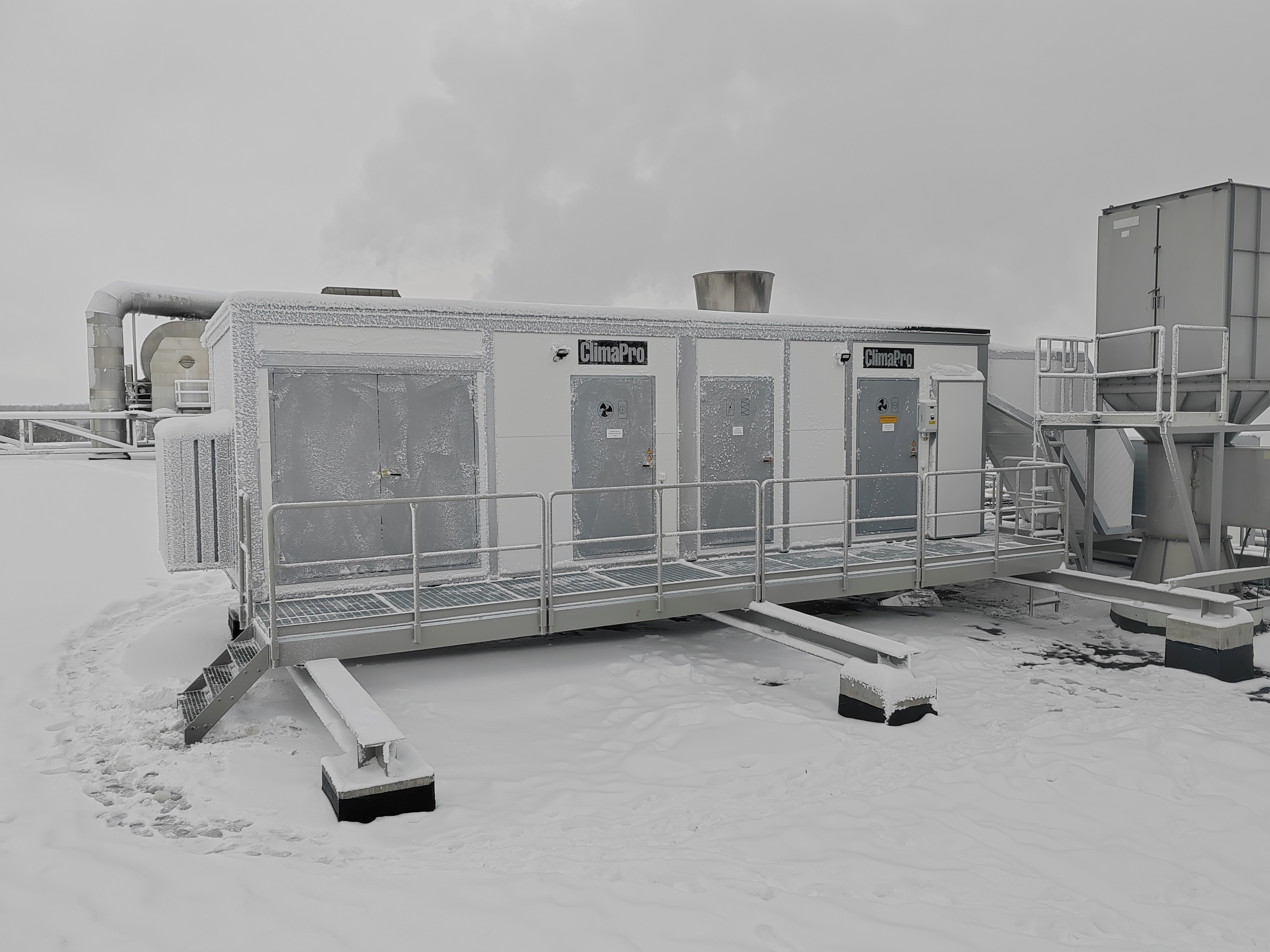
When an air handling unit (AHU) is installed on a roof, it is exposed to the harshest possible conditions: snow, ice, wind, heavy rain, temperature fluctuations, and moisture. Northern climate conditions in Finland make rooftop AHUs particularly demanding—therefore both the unit structure and installation method must be carefully designed.
Here is a concise expert guide on what kind of AHU structure works best in Finnish conditions and how it should be installed in rooftop applications in 2026.
1. Frame Structure: Strong and Thermal Bridge-Free
Key features of an AHU frame suitable for rooftop installation:
✔ Thermal bridge-free structure (Thermo Break)
Prevents heat loss, condensation risk, and freezing.
✔ Reinforced steel frame
Withstands wind loads and snow weight.
Especially in northern regions, the frame must be dimensioned for actual snow loads.
✔ Thicker insulation (50–100 mm)
In rooftop installations, insulation thickness affects both energy efficiency and freezing risk.
✔ Weather-resistant surface materials
E.g., hot-dip galvanized + powder-coated structure or stainless steel.
2. Weather Protection: The Most Critical Part of a Successful Rooftop Installation
A rooftop AHU requires effective weather protection to prevent water and snow ingress.
Best practices include:
✔ Pressurized rain hoods
Prevent water penetration in strong winds.
✔ Extended drip edges and flashings
Water is directed away from structures → reduced icing.
✔ Snow guards and protective barriers
Especially at supply and exhaust openings.
✔ Heating cables when necessary
Used in locations with high frost risk.
✔ Condensate management
- Designed condensate tray
- Insulated drainage
- Freeze protection
3. Heat Recovery and Components – Designed for Outdoor Conditions
Operating conditions are more demanding for rooftop AHUs.
Recommendations:
- Rotary heat recovery or glycol-based (run-around coil) system with antifreeze (e.g., ETG) → best freeze protection
- Cold-resistant fans → reliable operation in winter conditions
- Low-pressure filter banks → lower energy consumption
Rooftop installation must not compromise efficiency or component lifespan.
4. Best Installation Method: Support Frame + Service Platform
The AHU should be elevated above the roof surface and installed on a support structure that:
✔ Distributes loads safely
Prevents improper stress on roof structures.
✔ Prevents snow accumulation around the unit
Ensures ventilation and drying even in winter.
✔ Allows free drainage of condensate
Prevents freezing beneath the unit.
✔ Enables safe year-round maintenance
Service platform + railings → compliant with safety regulations.
5. Roof Penetrations and Sealing – A Critical Detail
Proper sealing of roof penetrations prevents:
- Water leaks
- Condensation issues
- Heat loss
- Ice formation around penetrations
Recommended structure:
- Raised curb (upstand)
- Insulated penetration
- Continuous vapor barrier
- Mechanically secured seals
6. Automation Prevents Freezing and Ice Loads
Smart automation protects the unit in Finnish winter conditions:
- Supply air frost protection
- Defrost functions (heat recovery)
- Humidity control
- Fan anti-icing functions
- Alarms and remote monitoring
Well-tuned automation can extend the unit’s service life by up to 10–15 years.
Summary: The Best Solution for Finnish Conditions
Structure:
- Reinforced, thermal bridge-free frame
- Thick insulation
- Weather-resistant materials
Weather Protection:
- Pressurized rain hoods
- Snow guards
- Condensate management
- Heating cables when needed
Installation:
- Unit elevated on a support frame
- Service platform and railings
- Insulated, raised roof penetrations
Technology:
- Glycol-based heat recovery system
- Reinforced fans
- Smart automation
When these elements are properly implemented, a rooftop AHU will operate reliably in all Finnish weather conditions and provide a long, low-maintenance service life.