
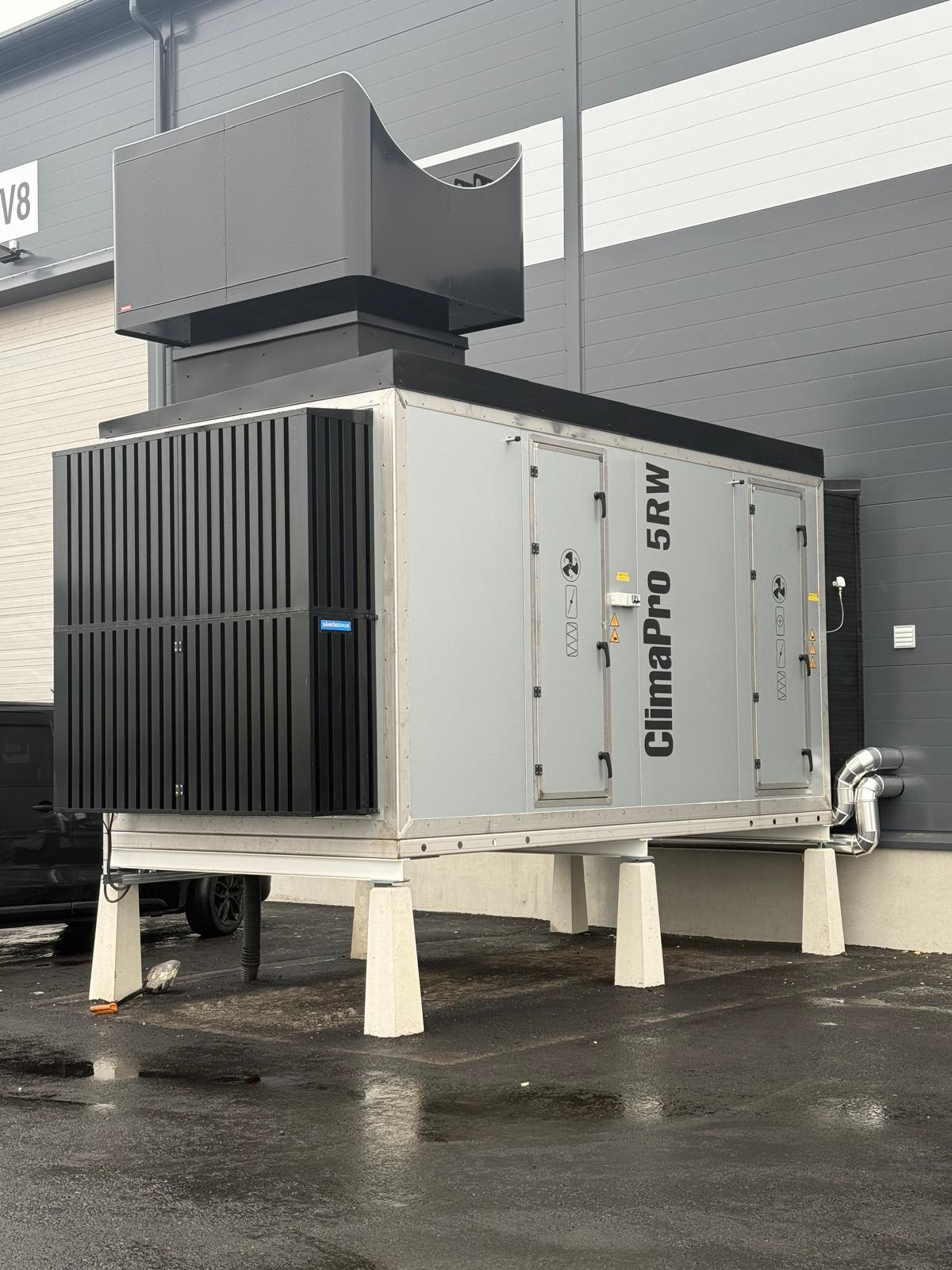
An air handling unit (AHU) is one of the longest-lasting and most critical technical systems in a building. Its purchase price is often only a fraction of the actual total cost – the greatest impact comes from energy costs during operation, maintenance, and upgrades carried out over the technical lifetime. Therefore, the entire life cycle should be considered during design and procurement, rather than focusing solely on the initial investment.
Here is a clear breakdown of what the life cycle costs of an air handling unit consist of and how they can be influenced.
1. Purchase Price – Only 10–25% of the Total Cost
The purchase price includes:
- AHU casing and components
- fans, heating/cooling coils, and heat recovery
- controls and automation
- possible weather protection or ATEX-rated construction
- installation and commissioning
This is the most visible and easiest part to budget – but often the least significant from a total cost perspective.
2. Energy Consumption – The Largest Single Cost Item
In most cases, 40–70% of an AHU’s life cycle costs are generated by energy consumption.
Energy is consumed by:
Fans
- In industrial halls, large air volumes mean high fan power requirements.
- EC fans and pressure control can reduce energy consumption by up to 20–30%.
Heating and Cooling
- Filters, duct pressure and the operating rate of the ventilation system directly affect heating energy requirements.
- Heat recovery efficiency (50–85%) is one of the most important factors when it comes to energy savings.
Heat Recovery Efficiency
Every +10% increase in efficiency can result in annual savings of thousands of euros in industrial facilities.
3. Filter and Maintenance Costs
Maintenance costs include:
- filters (replacement 1–4 times per year)
- cleaning of the heat recovery system
- replacement of belts, bearings, seals and sensors
- maintenance work
- possible fault repairs
Filters can account for 5–15% of life cycle costs, depending on dust loading and filtration class.
In industrial applications, this share can increase significantly if the filter class is not correctly selected.
4. Operating Profile and Control – A Significant Opportunity for Savings
Many AHUs operate at 100% capacity 24/7 – even when there is no actual need for it.
Life cycle costs are strongly affected by:
- demand-controlled ventilation (CO₂, pressure, temperature or VOC control)
- night-time and weekend setback
- scheduling of process exhaust systems
- variable-frequency drive (VFD) control
Properly designed control systems can reduce energy consumption by 10–40% without compromising comfort or process performance.
5. Spare Parts and Technical Upgrades
Over the long term, an AHU may require:
- control system upgrades
- fan or motor overhauls
- replacement of heat recovery components
- component upgrades (EC conversions, new sensors)
These can account for 5–20% of life cycle costs, but the costs can be significantly reduced through the right design and component choices.
6. Service Life – 15–30 Years
The service life of an AHU is affected by:
- high-quality construction (e.g. corrosion protection, insulation and casing rigidity)
- regular maintenance
- efficient heat recovery, which reduces the heating load
- fan technology (modern EC technology can extend service life)
A high-quality AHU casing can typically last through two or three “mechanical generations”, whereas a low-cost standard unit may need to be replaced after only 10–15 years.
What Makes Up the Total Cost of an AHU?
In summary:
| Cost Item | Share of Life Cycle Costs |
| Purchase price | 10–25% |
| Energy consumption | 40–70% |
| Filters and maintenance | 10–25% |
| Spare parts and upgrades | 5–20% |
| Other costs during service life | 5–10% |
The greatest savings therefore come from reducing energy consumption – not from minimizing the purchase price.
How Can You Minimize the Life Cycle Costs of an AHU?
- Choose energy-efficient EC fans
- Invest in high heat recovery efficiency (at least 70% in industrial applications)
- Optimize supply and extract airflows according to actual demand
- Use correctly sized filters and automate filter monitoring
- Ensure good serviceability and availability of components
- Use demand-controlled ventilation
- Favor modular and customized solutions if operating conditions change frequently
Summary
Understanding life cycle costs is the key to making better investment decisions. A low-cost AHU can become expensive if its heat recovery efficiency or fan efficiency is poor. Conversely, a high-quality, well-designed AHU can pay for itself through energy savings and lower maintenance costs.
When the entire system is evaluated from a life cycle perspective rather than based solely on the purchase price, the result is:
- lower operating costs
- better indoor air quality
- longer service life
- safer and more reliable operation